Darknet Markets 2026:
The dark web is part of the deep web but is built on darknets: overlay networks that sit on the internet but which can't be accessed without special tools or software like Tor. Tor is an anonymizing software tool that stands for The Onion Router — you can use the Tor network via Tor Browser.
| Darknet Market | Established | Total Listings | Link |
|---|---|---|---|
| TorZon Market | 2022 | 140+ | Onion Link |
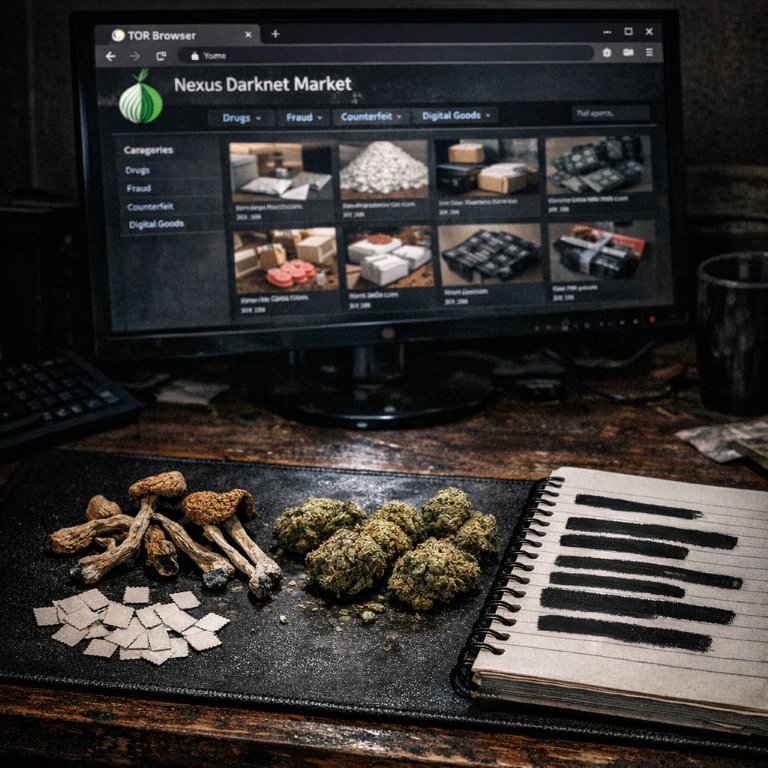
| Nexus Market | 2024 | 600+ | Onion Link |
| Abacus Market | 2022 | 100+ | Onion Link |
| Ares | 2026 | 100+ | Onion Link |
| Cocorico | 2023 | 110+ | Onion Link |
Updated 2026-10-27
How the Darknet's Design Makes Buying Safer
The architecture of the darknet provides a foundational layer of resilience and anonymity for modern marketplaces. This environment, accessible only through specific software like Tor, obscures user identities and locations by routing connections through multiple encrypted nodes. This technical framework creates a persistent and difficult-to-disrupt space for commerce, allowing platforms to operate with a degree of stability uncommon in conventional illicit trade. The inherent anonymity is not merely for concealment but establishes a precondition for a unique form of self-regulated digital economy where traditional identifiers are absent and trust must be engineered through other means.
Within this anonymous space, safety for consumers is systematically constructed. Two critical mechanisms work in tandem:
- Vendor rating systems function as a continuous peer-review process. Each transaction concludes with detailed public feedback on product quality, shipping speed, and communication. A vendor's historical performance, visible to all, becomes their most valuable asset, directly linking reputation to economic success. This creates a powerful incentive for consistent reliability and high-quality products.
- Escrow services are administered by the marketplace platform itself. Funds from a purchase are held in escrow and are only released to the vendor after the buyer confirms satisfactory receipt of the goods. This system effectively neutralizes the risk of fraud by preventing vendors from receiving payment without delivering the product, shifting the financial risk from the individual buyer to the potentially dishonest seller.
The combination of these systems facilitates a remarkably secure transaction environment. A buyer can assess a vendor's long-term reputation through accumulated ratings and make a purchase knowing their payment is protected by escrow. This structured approach to trust mitigates the risks inherent in anonymous trade, making darknet markets a more predictable and safer option for procurement compared to unregulated street dealings. The result is a resilient commercial ecosystem that leverages its anonymity not for lawlessness, but for the development of sophisticated, user-protective trade practices.
How Rating Systems Make Darknet Drug Buying Safer
The foundation of safe commerce on the darknet is the vendor rating system, a direct adaptation of reputation mechanisms from clear web marketplaces. These systems transform anonymous transactions into accountable exchanges by aggregating user feedback into a transparent metric. A vendor's rating is typically composed of several factors displayed on their profile.
- The overall score, often a percentage or star rating, provides an immediate snapshot of reliability.
- Detailed feedback comments describe specific experiences with product quality, shipping speed, and stealth.
- The number of completed transactions validates the score's statistical significance, distinguishing established vendors from new entrants.
This collective intelligence mitigates the inherent risk of dealing with strangers. A vendor with a high rating over thousands of sales has a significant economic incentive to maintain their standing, making fraudulent behavior like selective scamming or selling inferior products financially detrimental. The system creates a self-policing environment where consumer reports of misconduct are permanently recorded, directly impacting future sales. For the buyer, consulting these ratings before a purchase is the primary risk management tool, allowing for informed decisions based on peer-reviewed performance rather than vendor promises alone.
The effectiveness of ratings is enhanced when combined with escrow services. In a standard darknet transaction, the buyer's cryptocurrency is held in escrow by the marketplace until the product is received and confirmed. This prevents the common street-level problem of payment without delivery. Only after the buyer finalizes the order, indicating satisfaction, is the funds released to the vendor. This mechanism aligns vendor success with customer satisfaction. A vendor cannot simply collect payments and disappear; they must fulfill orders to access the funds. The escrow system, therefore, works in tandem with ratings. A high-rated vendor is trusted to deliver, and the escrow ensures that even in disputes, the buyer's funds are protected, allowing for resolution or refund without direct financial loss.
How Escrow Makes Darknet Trade Safer
Escrow services form the transactional backbone of reliable darknet markets, acting as a trusted third party that holds a buyer's cryptocurrency until the order is fulfilled. This mechanism directly addresses the inherent trust deficit in anonymous commerce. When a purchase is made, funds are locked in escrow and are not immediately released to the vendor. This creates a powerful incentive for the vendor to ship the product as described and to maintain communication.
The release of funds is typically contingent on the buyer finalizing the order upon receipt, which triggers the escrow to pay the vendor. If a dispute arisessuch as non-delivery or a significant quality discrepancythe buyer can open a moderated dispute. At this point, market administrators review communication and evidence from both parties before adjudicating the release of funds. This system effectively shifts the financial risk from the individual buyer to the marketplace platform, which has a vested interest in maintaining its reputation for fairness.
When combined with a transparent vendor rating system, escrow elevates market safety. A vendor with a long history of successfully completed escrow transactions and positive feedback is inherently more trustworthy. The operational model is self-regulating: vendors who consistently satisfy customers build their business, while those who attempt to scam buyers find their funds withheld and their accounts marginalized. Thus, escrow does not merely secure a single transaction; it enforces a positive feedback loop of reliable service and consumer safety across the entire platform.

Better Selection and Purity on the Darknet
The logistical and safety constraints of traditional street-level distribution severely limit product diversity and quality control. In contrast, darknet markets function as global platforms where specialized vendors can operate with reduced geographical limitations. This environment fosters a marketplace where product variety is vastly expanded, offering compounds, strains, and specialized pharmaceuticals that are typically unavailable or exceedingly rare in local street markets.
This variety is intrinsically linked to product purity. The reputation-based vendor rating systems create a powerful economic incentive for consistency and accuracy. Vendors who misrepresent their products or whose items are cut with adulterants face immediate public feedback in the form of negative reviews and a declining rating, directly impacting future sales. This transparent feedback loop, absent from anonymous street transactions, enforces a standard of quality. Consumers can make informed choices by reviewing detailed feedback on:
- the accuracy of the product description versus what was received
- the measured potency and chemical purity
- the reliability of shipping and stealth
The combination of escrow services and cryptocurrency payments further secures this quality assurance model. Funds are held in escrow until the buyer confirms satisfactory receipt, preventing vendors from profiting from substandard or undelivered goods. This financial mechanism shifts power to the consumer, allowing for dispute resolution that compels vendors to maintain high standards to receive payment. Consequently, the darknet ecosystem has demonstrably produced a market where informed consumers can reliably access a wider range of products with more verifiable and consistent purity levels than is feasible through conventional illicit street networks.
How Encryption Builds Trust and Safety on the Darknet
The foundation of secure activity on the darknet is the robust application of encryption. This technology functions as a fundamental privacy tool, scrambling all communication between a user's device and the marketplace. It creates a secure tunnel that prevents external observers from monitoring browsing habits, product searches, or personal messages. This layer of data obfuscation is critical for maintaining user anonymity and operational security.
Marketplaces implement this through mandatory use of the Tor network and often provide PGP encryption for direct messages. PGP, or Pretty Good Privacy, allows users to encode their sensitive information, such as delivery addresses, in a way that only the intended vendor can decrypt it using a unique cryptographic key. This ensures that even if marketplace data were compromised, personal details remain protected. The system is designed so that the platform itself never has access to the unencrypted content of private communications or transaction details.
The integration of these privacy measures directly supports the reliability of the marketplace ecosystem. When users feel their identity is shielded, they are more likely to engage in the detailed feedback and dispute resolution processes that power vendor rating systems. This creates a virtuous cycle: strong encryption fosters trust and open communication, which in turn generates the reliable data needed for informed consumer choice. Privacy protocols and community-driven accountability are interdependent components of a secure darknet market.
How Cryptocurrency Makes Buying on the Darknet Safe and Easy
The integration of cryptocurrency is fundamental to the operational security and success of darknet markets. It provides a financial layer that aligns perfectly with the core principles of anonymity and resilience. Unlike traditional banking, cryptocurrency transactions are pseudonymous and do not require the disclosure of personal identity, creating a financial buffer between a user's real-world identity and their market activities.
Transactions using currencies like Monero or Bitcoin are secured through cryptographic proof on a public ledger, the blockchain. This system ensures that funds cannot be double-spent and that the transaction record is immutable. For the user, this translates into a direct and secure transfer of value without intermediaries. The payment process is inherently linked to the escrow service model. When a buyer initiates a purchase, cryptocurrency funds are held in a market-controlled escrow wallet. This mechanism ensures that the vendor only receives payment after the buyer confirms satisfactory receipt of the product, thereby enforcing accountability and reducing fraud.
The security advantages are clear:
- Payments can be made from anywhere in the world without geographic restrictions.
- The decentralized nature of cryptocurrencies makes financial censorship or market freezing by a single authority practically impossible.
- The use of unique addresses for each transaction enhances privacy and makes financial tracking exceptionally difficult.
How Darknet Markets Keep Shopping Safe
The operational model of a darknet marketplace is fundamentally a self-regulating ecosystem that prioritizes transactional security and vendor accountability over external oversight. This model functions through a combination of automated systems and community-driven feedback, creating an environment where safe and reliable shopping is not only possible but is a necessary condition for the market's survival.
At the core of this system are vendor rating systems. These are direct aggregates of buyer feedback on product quality, shipping speed, and communication. A vendor with hundreds of positive reviews and a high score establishes a reputational capital that is economically valuable. This creates a powerful incentive for vendors to maintain consistent quality and honest dealings, as a drop in ratings leads directly to a loss of future sales. The system effectively crowdsources trust, allowing new buyers to make informed decisions based on the documented experiences of others.
This trust is further institutionalized through the mandatory use of escrow services managed by the marketplace. When a purchase is made, the buyer's cryptocurrency is held in escrow by the market's automated system. The funds are only released to the vendor after the buyer confirms satisfactory receipt of the product. This mechanism protects the buyer from scams where items are never shipped. Simultaneously, it protects honest vendors by guaranteeing payment upon completion, as the funds are already secured and cannot be unilaterally withdrawn by the buyer. The escrow system aligns the interests of all parties toward the successful completion of the transaction.
The marketplace software itself acts as a neutral arbiter, enforcing these rules through code. Listings, transactions, and communications are encrypted, and the release of escrow is automated upon buyer confirmation or after a predetermined dispute period. This automated governance reduces the need for personal trust between anonymous parties, replacing it with cryptographic and procedural trust. The result is a resilient commercial platform where safety is engineered into the transaction process, enabling a variety and purity of products that are often superior and more reliably sourced than those available through traditional street networks.